
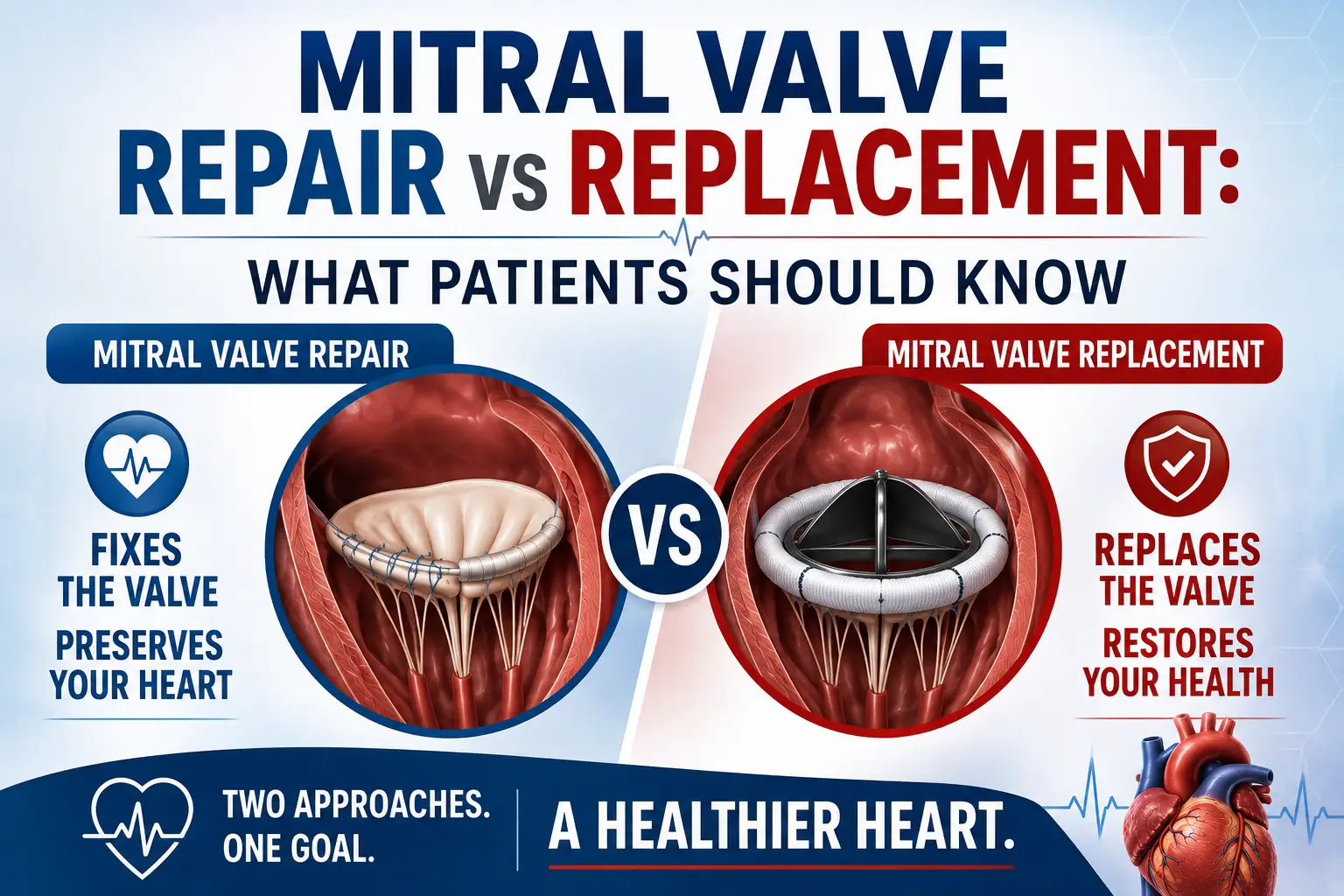
The mitral valve plays an important role in helping blood move efficiently through the left side of the heart. When the valve becomes damaged or diseased, it may not open or close properly, which can interfere with normal blood flow and place extra strain on the heart.
For some patients, medicines and monitoring may be appropriate. In other cases, surgery may be recommended to correct the valve problem. When surgery is needed, the two main options are mitral valve repair and mitral valve replacement.
Both approaches can be effective, but they are not interchangeable. The best treatment depends on the type of valve disease, the structure of the valve, the severity of the problem, heart function, symptoms, age, overall health, and the surgeon’s assessment.

What Is the Mitral Valve?
The mitral valve is located between the left atrium and left ventricle of the heart. It opens to allow blood to move into the left ventricle and then closes to prevent blood from flowing backward when the ventricle pumps.
A healthy mitral valve opens and closes in a coordinated way. When its leaflets, supporting structures, or surrounding tissue become abnormal, the valve may begin to leak or become narrowed.
What Problems Can Affect the Mitral Valve?
Two of the main mitral valve problems are mitral regurgitation and mitral stenosis.
Mitral Regurgitation
Mitral regurgitation occurs when the valve does not close properly and blood leaks backward from the left ventricle into the left atrium.
This backward flow can increase the workload on the heart and, when significant, may eventually contribute to enlargement of heart chambers, rhythm problems, reduced heart function, or symptoms.
Mitral Stenosis
Mitral stenosis occurs when the valve opening becomes narrowed, making it harder for blood to pass from the left atrium into the left ventricle.
Severe narrowing can increase pressure in the left atrium and lungs and may lead to symptoms such as shortness of breath, fatigue, or reduced exercise tolerance.
What Symptoms Can Mitral Valve Disease Cause?
Symptoms depend on the type and severity of valve disease and can develop gradually.
Possible symptoms may include:
- Shortness of breath
- Reduced exercise tolerance
- Fatigue
- Palpitations or awareness of heartbeat
- Swelling in the legs or ankles
- Difficulty breathing when lying flat in more advanced cases
- Other symptoms related to reduced cardiac efficiency
Some patients may have significant valve disease before obvious symptoms appear, so regular assessment can be important when a mitral valve abnormality has already been identified.
When Might Mitral Valve Surgery Be Needed?
Surgery may be considered when mitral valve disease becomes severe, causes symptoms, begins to affect heart function, or is expected to cause progressive damage if left untreated.
The decision is based on a combination of clinical findings and imaging rather than symptoms alone.
Doctors may consider factors such as:
- Severity of valve leakage or narrowing
- Presence and severity of symptoms
- Changes in heart size
- Left ventricular function
- Pulmonary pressures
- Heart rhythm
- Valve anatomy
- Other cardiac conditions
- Overall health and surgical risk
What Is Mitral Valve Repair?
Mitral valve repair is a surgical approach in which the patient’s own valve is preserved and corrected rather than removed.
The exact repair technique depends on the problem affecting the valve. The surgeon may reshape or support parts of the valve, correct abnormal leaflet movement, repair supporting structures, or place a ring around the valve to improve its shape and function.
The goal is to restore effective valve closure while preserving as much normal valve tissue as possible.
What Is Mitral Valve Replacement?
Mitral valve replacement is performed when the native valve cannot be repaired reliably or when replacement is considered the more appropriate option.
During replacement, the diseased valve is replaced with a prosthetic valve.
Replacement valves are generally divided into two broad categories:
- Mechanical valves
- Biological or tissue valves
Each type has advantages and limitations, and the choice depends on factors such as age, medical history, need for long-term blood-thinning medication, lifestyle, durability considerations, and individual preference after discussion with the treating team.
Mitral Valve Repair vs Replacement: What Is the Main Difference?
The main difference is whether the patient’s own valve is preserved.
- Repair: the native mitral valve is corrected and retained.
- Replacement: the diseased valve is replaced with a prosthetic valve.
Whenever a durable and effective repair is technically possible and clinically appropriate, preserving the native valve may offer important advantages.
However, not every valve can be repaired successfully, and replacement may be the better option in certain forms of advanced or complex valve disease.
What Are the Potential Advantages of Mitral Valve Repair?
In appropriately selected patients, successful mitral valve repair may offer several potential benefits.
- Preservation of the patient’s own valve
- Maintenance of more natural heart structure and function
- Avoidance of a prosthetic valve when possible
- Potentially lower risk of certain valve-related complications
- Reduced need for lifelong anticoagulation in some patients
The exact benefits depend on the valve problem and the durability of the repair.
When May Valve Replacement Be More Appropriate?
Mitral valve replacement may be recommended when the valve is too damaged, calcified, scarred, deformed, or otherwise unsuitable for a reliable repair.
Replacement may also be considered when the probability of a durable repair is low or when the valve disease has a structure that makes repair less predictable.
The objective is not simply to preserve the valve at all costs. The priority is to achieve a safe and durable result that restores effective valve function.
Mechanical vs Biological Mitral Valve Replacement
When replacement is required, the surgical team may discuss the choice between a mechanical and a biological valve.
Mechanical Valve
Mechanical valves are designed for long-term durability. However, patients with mechanical valves generally require ongoing anticoagulation medication to reduce the risk of blood clot formation on the valve.
Biological Valve
Biological valves are made from specially prepared tissue. They generally do not have the same long-term anticoagulation requirements as mechanical valves, but their durability can be more limited.
The best choice depends on the patient’s age, medical condition, ability to take anticoagulation safely, lifestyle, preferences, and other clinical factors.
How Do Doctors Decide Between Repair and Replacement?
The decision is based on detailed assessment of the valve and the overall condition of the heart.
Important considerations may include:
- Cause of the mitral valve disease
- Severity of regurgitation or stenosis
- Condition of the valve leaflets
- Condition of supporting valve structures
- Amount of calcification or scarring
- Size and function of the heart chambers
- Presence of coronary artery disease
- Other valve problems
- Heart rhythm
- Age and overall health
- Expected durability of a repair
What Tests Are Used Before Mitral Valve Surgery?
Several investigations may be used to understand the valve problem and plan treatment.
Depending on the patient, these may include:
- Electrocardiogram (ECG)
- Transthoracic echocardiography
- Transesophageal echocardiography in selected cases
- Blood tests
- Chest imaging
- Coronary angiography when appropriate
- CT or other advanced imaging in selected patients
- Additional tests based on overall medical condition
Echocardiography is particularly important because it allows doctors to evaluate the movement, structure, and function of the mitral valve.
Can Mitral Valve Surgery Be Minimally Invasive?
Selected patients may be suitable for minimally invasive mitral valve surgery.
Instead of using wider conventional surgical access, the heart may be reached through smaller targeted access points using specialized instruments and advanced surgical techniques.
In selected centers and patients, robotic technology may also be used as part of a minimally invasive mitral valve procedure.
Not every patient is suitable for a minimally invasive or robotic approach. The choice depends on valve anatomy, previous surgery, other cardiac procedures that may be required, overall health, and surgical assessment.
Mitral Valve Repair vs Replacement: Key Differences
| Factor | Mitral Valve Repair | Mitral Valve Replacement |
|---|---|---|
| Native Valve | Preserved | Replaced with a prosthetic valve |
| Suitability | When a durable repair is technically possible | When reliable repair is not appropriate or achievable |
| Valve Type | Patient’s own valve | Mechanical or biological valve |
| Long-Term Medication | Depends on individual condition | May include long-term anticoagulation, especially with mechanical valves |
| Primary Goal | Restore effective mitral valve function and protect the heart | |
What Are the Risks of Mitral Valve Surgery?
Both repair and replacement are major cardiac procedures and carry potential risks.
Possible complications may include:
- Bleeding
- Infection
- Abnormal heart rhythms
- Blood clot-related complications
- Lung or breathing problems
- Kidney-related complications
- Neurological complications
- Residual or recurrent valve dysfunction
- Need for additional treatment or future procedures
The actual risk varies considerably according to age, overall health, heart function, complexity of valve disease, urgency of surgery, and other medical conditions.
What Happens After Mitral Valve Surgery?
After surgery, patients are monitored closely while heart function, breathing, circulation, blood pressure, rhythm, pain, and surgical recovery are assessed.
As the condition stabilizes, recovery generally progresses toward increasing mobility, eating normally, managing pain, wound care, and preparing for discharge.
Recovery After Mitral Valve Repair or Replacement
Recovery depends on the type of operation and surgical access used.
Factors that may influence recovery include:
- Whether repair or replacement was performed
- Conventional or minimally invasive surgical access
- Age
- Heart function before surgery
- Other heart procedures performed at the same time
- Other medical conditions
- Development of postoperative complications
- Individual healing response
Patients should follow the activity, wound-care, medication, and follow-up instructions provided by their own surgical team.
Will I Need Blood-Thinning Medication After Surgery?
The need for anticoagulation depends on the procedure performed and the patient’s medical condition.
Patients with a mechanical valve generally require long-term anticoagulation to reduce the risk of clot formation.
Patients with biological valves or repaired valves may have different medication requirements based on heart rhythm, other medical conditions, and the treating team’s recommendations.
Blood-thinning medicines should never be started, stopped, or changed without medical advice.
Can Mitral Valve Disease Return After Repair?
A successful repair is intended to provide durable valve function, but recurrent valve leakage or other valve problems can develop in some patients over time.
Regular follow-up with echocardiography may be recommended to monitor valve function after treatment.
Can a Replacement Valve Wear Out?
Biological valves can gradually deteriorate over time, while mechanical valves are generally more durable but have other long-term management considerations.
The expected lifespan of a replacement valve varies according to valve type, age, medical factors, and individual circumstances.
How Important Is Follow-Up After Mitral Valve Surgery?
Follow-up is an important part of long-term care after both valve repair and replacement.
Medical reviews may be used to assess:
- Valve function
- Heart chamber size and pumping function
- Heart rhythm
- Symptoms
- Medication requirements
- Recovery and physical activity
- Need for additional cardiac investigations
Questions to Ask Your Cardiac Surgeon
If mitral valve surgery has been recommended, useful questions may include:
- What type of mitral valve disease do I have?
- How severe is the problem?
- Why is surgery recommended now?
- Can my mitral valve be repaired?
- How likely is the repair to be durable?
- Why might replacement be necessary?
- If replacement is needed, which type of valve would be appropriate?
- Will I need long-term anticoagulation?
- Am I suitable for minimally invasive surgery?
- Could robotic surgery be appropriate in my case?
- What are my individual surgical risks?
- How long might recovery take?
- What follow-up will I need after surgery?
Frequently Asked Questions About Mitral Valve Repair and Replacement
Is mitral valve repair better than replacement?
Repair may offer important advantages when a durable and effective repair is technically possible. However, replacement may be safer or more reliable when the valve is severely damaged or unsuitable for repair.
Can every mitral valve be repaired?
No. Repair suitability depends on the cause and structure of the valve disease. Some valves can be repaired very effectively, while others may require replacement.
How do doctors know whether the valve can be repaired?
Detailed echocardiography and other imaging help show the anatomy and movement of the valve. The final assessment may also depend on findings during surgery.
Is mitral valve replacement permanent?
Replacement valves are designed for long-term use, but durability varies according to the type of prosthetic valve and individual circumstances.
Do all replacement valves require blood thinners for life?
No. Mechanical valves generally require long-term anticoagulation, while biological valves have different medication considerations. Individual requirements should be discussed with the treating team.
Can mitral valve surgery be done without opening the full chest?
Selected patients may be suitable for minimally invasive or robotic approaches using smaller surgical access points. Suitability must be determined individually.
How long does recovery take after mitral valve surgery?
Recovery varies according to the procedure, surgical approach, age, overall health, heart function, and postoperative progress. The treating team can provide more individualized guidance.
Repair or Replacement: Which Is Right for You?
The decision between mitral valve repair and replacement should not be based on a general preference for one procedure.
A durable repair may be highly beneficial when the patient’s valve anatomy is suitable. In other cases, replacement may provide a safer and more reliable result.
The most appropriate approach is determined after careful assessment of the valve, heart function, symptoms, imaging findings, overall health, and expected long-term outcome.
The goal is not simply to preserve or replace the valve—the goal is to restore effective heart function with the most appropriate and durable treatment for the individual patient.
Consult Dr. Arunansu Dhole for Mitral Valve Surgery
Dr. Arunansu Dhole, MBBS, DNB, MCh (CTVS), MRCS (Eng), is a Cardiothoracic & Vascular Surgeon providing advanced cardiac surgical care, including mitral and aortic valve surgery, minimally invasive cardiac surgery, robotic cardiac surgery, and coronary artery bypass surgery.
If you have been diagnosed with mitral valve disease or advised to consider valve repair or replacement, a detailed cardiac surgical evaluation can help clarify the severity of the condition and the treatment options available.
Schedule a consultation with Dr. Arunansu Dhole for individualized assessment and discussion of mitral valve repair, replacement, and advanced surgical options.
Important Medical Information
This article is intended for general patient education only and should not be used for self-diagnosis or to choose a valve procedure without professional medical evaluation. The suitability, benefits, risks, durability, medication requirements, and recovery associated with mitral valve repair or replacement vary between patients. Please consult a qualified cardiologist or cardiothoracic surgeon for personalized recommendations.