
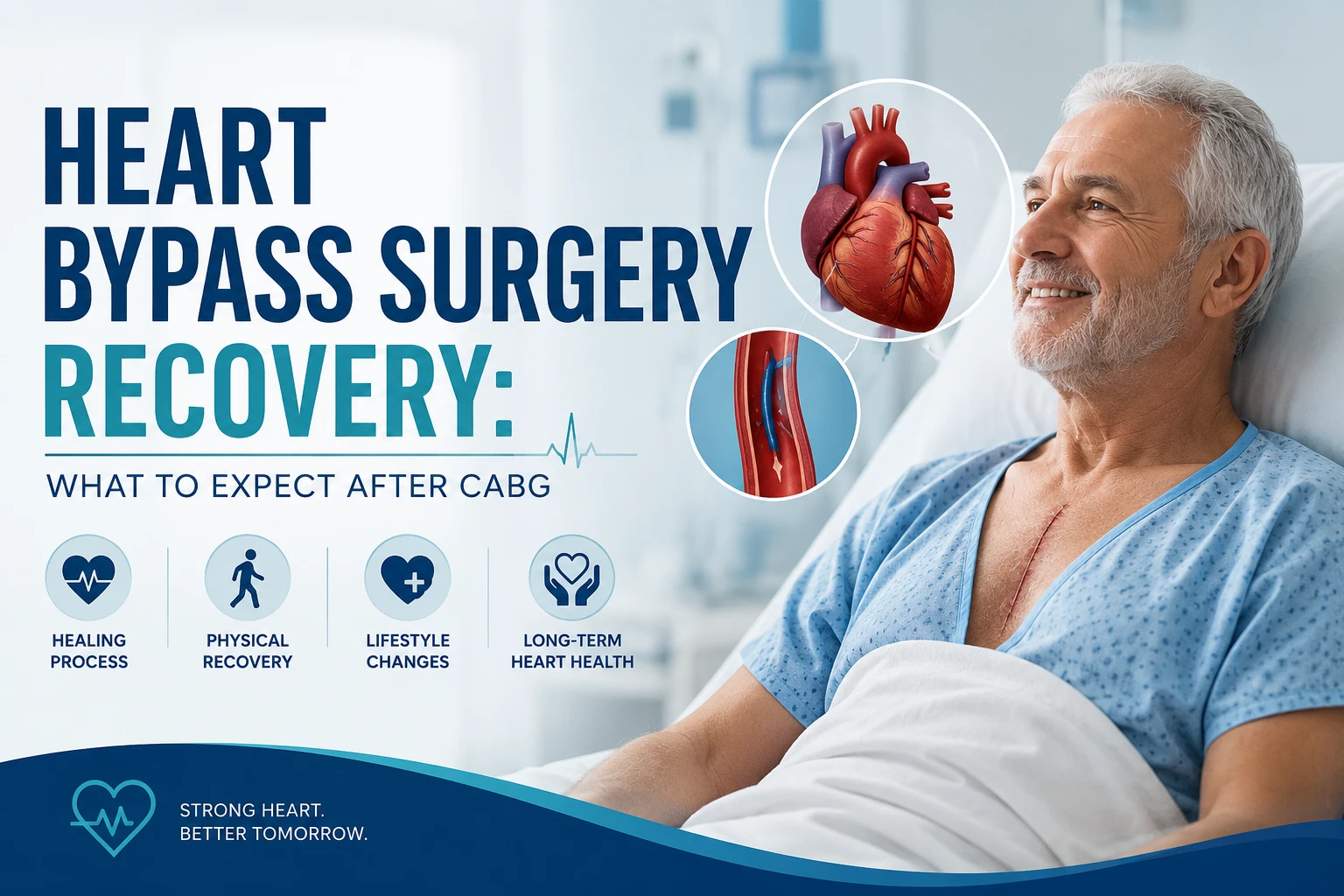
Recovering from coronary artery bypass grafting (CABG), commonly known as heart bypass surgery, is a gradual process. Although the operation improves blood flow to the heart, the body still needs time to recover from major cardiac surgery.
Many patients and families naturally have questions after bypass surgery: How long will recovery take? When can walking begin? When is it safe to return to work? What should happen after leaving the hospital? And how can future heart problems be reduced?
The answers are different for every patient. Recovery depends on the type of bypass procedure, number of grafts, heart function, age, general health, other medical conditions, postoperative progress, and whether any complications develop.
This patient guide explains the typical stages of recovery after CABG, from the first days in hospital to gradually returning to everyday activities and maintaining long-term heart health.

Understanding Recovery After CABG Surgery
CABG creates new pathways for blood to reach areas of the heart affected by significantly narrowed or blocked coronary arteries. Although improved blood flow is an important goal of the operation, patients still need time for the chest, surgical access sites, graft-harvest areas, muscles and overall body to recover.
Recovery should therefore be viewed as a progression rather than a race.
Some people improve faster than expected, while others require more time. Individual instructions from the cardiac surgical team should always take priority over a general recovery timeline.
What Happens Immediately After CABG?
Immediately after bypass surgery, patients are cared for in a closely monitored postoperative environment.
The medical team monitors important functions such as:
- Heart rate and rhythm
- Blood pressure
- Breathing and oxygen levels
- Circulation
- Fluid balance
- Kidney function
- Bleeding
- Pain and comfort
- Overall neurological and physical recovery
Several monitoring devices, intravenous lines, drains or other temporary medical equipment may be used during the early postoperative period. These are removed gradually when they are no longer required.
The First Few Days After Heart Bypass Surgery
During the first few days, the emphasis shifts gradually from intensive monitoring toward mobility, breathing exercises, eating, wound care and preparation for discharge.
Recovery activities may include:
- Sitting upright when medically appropriate
- Breathing exercises
- Gradually beginning to walk
- Increasing movement around the hospital
- Resuming food and fluids as advised
- Managing postoperative discomfort
- Monitoring surgical wounds
- Reviewing medicines
The pace of this progression varies. Patients should follow the instructions of their treating team rather than trying to achieve specific milestones by a particular day.
What Can You Expect When You Return Home?
Leaving the hospital is an important milestone, but it does not mean recovery is complete.
At home, patients commonly need a balance between gentle activity and adequate rest. Energy levels may vary from day to day, particularly during the earlier stages of recovery.
The first phase at home generally focuses on:
- Following prescribed medicines correctly
- Caring for surgical sites
- Gradually increasing walking and movement
- Eating according to medical and dietary advice
- Getting adequate sleep and rest
- Monitoring recovery
- Attending scheduled follow-up appointments
CABG Recovery Timeline: A General Guide
There is no universal CABG recovery calendar. The following stages are intended only as a broad patient-education guide and should not replace individualized instructions from the treating cardiac team.
Early Recovery: The First Days
During the earliest stage, patients are usually closely monitored and gradually become more mobile as their condition stabilizes.
The focus is on safe recovery from surgery, pain control, breathing, circulation, wound assessment, nutrition and gradual movement.
Early Home Recovery: The First Few Weeks
After returning home, tiredness and reduced stamina can still be present. Gentle walking and light daily activities may gradually increase according to medical advice.
This is an important healing phase. Trying to return immediately to a full pre-surgery routine can place unnecessary strain on the recovering body.
Intermediate Recovery: The Following Weeks
As healing progresses, many patients notice improvement in mobility and stamina. Everyday activities may gradually become easier.
Follow-up assessment can help determine whether activities such as driving, work, exercise or travel can be resumed.
Longer-Term Recovery
Full recovery from CABG can take weeks to months depending on the patient and surgical approach.
Even when a patient feels much better, long-term treatment of coronary artery disease continues through medicines, risk-factor management, lifestyle changes, cardiac rehabilitation when recommended, and regular follow-up.
How Long Does It Take to Recover From CABG?
Recovery time varies considerably between patients.
Factors that can affect the recovery period include:
- Age
- Overall physical health
- Heart function
- Number and complexity of bypass grafts
- Type of surgical approach
- Diabetes
- Kidney or lung conditions
- Previous heart procedures
- Physical fitness before surgery
- Postoperative complications
- Individual healing response
This is why another patient’s recovery timeline should not be used as a prediction for your own recovery.
Is Tiredness Normal After Bypass Surgery?
Reduced energy can occur during recovery from major cardiac surgery. The body is healing while also adjusting to changes in sleep, physical activity, medicines and daily routine.
Patients should gradually increase activity while allowing enough time for rest.
If tiredness becomes severe, suddenly worsens, or occurs together with other concerning symptoms, the healthcare team should be contacted.
Walking After CABG Surgery
Walking is commonly used as part of gradual postoperative activity once the medical team considers it appropriate.
The objective is not to walk as fast or as far as possible. Activity generally starts gently and increases progressively according to individual recovery.
Important principles include:
- Start gradually
- Follow your surgical team’s activity plan
- Increase distance progressively rather than suddenly
- Allow adequate rest
- Avoid comparing your progress with other patients
- Stop and seek medical advice if concerning symptoms occur
Breathing Exercises and Lung Recovery
Deep-breathing exercises or other respiratory exercises may form part of postoperative care after cardiac surgery.
These exercises are usually taught by the hospital team and should be performed according to their instructions.
Early movement and appropriate breathing exercises can form part of the overall strategy to support postoperative recovery.
Taking Care of the Surgical Incision
Proper wound care is an important part of recovery after bypass surgery.
Patients should follow the exact wound-care instructions provided before discharge.
General principles may include:
- Keeping the surgical area clean as instructed
- Checking the wound regularly
- Avoiding unapproved creams or products on the incision
- Following bathing instructions from the medical team
- Avoiding scratching or unnecessary handling of the wound
- Reporting concerning changes promptly
What About the Area Where the Graft Was Taken?
Depending on the type of CABG performed, a blood vessel used for the bypass may be taken from another area of the body.
The graft-harvest area can also require time to heal and may have its own wound-care and activity instructions.
Patients should follow individualized advice for both the chest incision and any additional surgical sites.
Pain and Discomfort During Recovery
Some discomfort is expected after major surgery, but pain experiences differ significantly between patients.
Patients should use pain medicines exactly as prescribed and discuss inadequate pain control or unexpected changes with their healthcare team.
Good pain management can also make it easier to move, breathe deeply and participate appropriately in rehabilitation.
Sleep After Heart Bypass Surgery
Sleep patterns may temporarily change after heart surgery. Some patients may find it difficult to get comfortable or may experience interrupted sleep during the early recovery phase.
A regular routine, appropriate daytime activity, adequate pain management and following medical instructions may help as recovery progresses.
Persistent sleep problems should be discussed during follow-up.
Eating After CABG
Nutrition forms part of both recovery and long-term cardiovascular care.
Dietary recommendations can vary according to the patient’s medical history, kidney function, diabetes, blood pressure, cholesterol and other conditions.
Patients should therefore follow individualized dietary advice from their medical team or dietitian rather than relying on a restrictive diet found online.
When Can You Return to Normal Activities?
Returning to normal activity should happen gradually.
The appropriate timing for different activities depends on the surgical approach, healing progress and individual health.
Household Activities
Light everyday activities may gradually resume as recovery progresses and when the treating team considers them appropriate.
Driving
Patients should not assume that they can drive as soon as they feel comfortable. Driving should resume only after medical clearance and according to local requirements.
Returning to Work
The time required before returning to work depends on recovery and the type of occupation.
A desk-based role and a physically demanding occupation may require very different return-to-work plans.
Lifting and Strenuous Activity
Restrictions on lifting and strenuous activity depend particularly on the surgical approach and healing of the chest.
Patients should follow their surgeon’s specific restrictions rather than using a general weight or time limit.
Exercise
Exercise should be resumed gradually and according to medical advice. A cardiac rehabilitation program may provide a structured and supervised environment for increasing activity.
What Is Cardiac Rehabilitation?
Cardiac rehabilitation is a medically supervised program designed to support cardiovascular recovery and long-term heart health after events or procedures such as heart surgery.
Depending on the program and the patient’s needs, cardiac rehabilitation may include:
- Supervised or structured physical activity
- Education about cardiovascular health
- Medication guidance
- Management of cardiac risk factors
- Nutrition guidance
- Support for returning to everyday activities
- Long-term lifestyle planning
Patients should ask their healthcare team whether and when cardiac rehabilitation is appropriate for them.
Emotional Recovery After Heart Surgery
Recovery after major cardiac surgery is not only physical. Patients may experience temporary changes in mood, confidence, sleep, motivation or anxiety about returning to normal activities.
Support from family, the healthcare team and structured rehabilitation can be valuable during this period.
Persistent or significant emotional difficulties should be discussed with a healthcare professional rather than ignored.
Follow-Up After CABG Surgery
Follow-up allows the medical team to assess healing, symptoms, heart health, medicines and progress toward normal activity.
The follow-up plan may involve the cardiac surgeon, cardiologist, primary physician and other healthcare professionals.
Patients should attend scheduled appointments even when recovery appears to be progressing well.
Medicines After Bypass Surgery
CABG does not necessarily mean that heart medicines are no longer required.
Patients may continue or begin medications intended to support cardiovascular health, prevent complications or control conditions such as cholesterol, high blood pressure or diabetes.
Medicines should not be stopped, restarted or changed without advice from the treating healthcare team.
Does CABG Cure Coronary Artery Disease?
CABG improves blood flow by creating new pathways around significantly diseased coronary arteries, but it does not remove the underlying tendency to develop atherosclerosis.
Long-term cardiovascular risk management therefore remains important after successful surgery.
Depending on individual medical advice, this may include:
- Taking prescribed medicines
- Managing cholesterol
- Controlling blood pressure
- Managing diabetes when present
- Avoiding tobacco exposure
- Following an appropriate heart-healthy eating plan
- Remaining physically active as advised
- Maintaining regular medical follow-up
- Participating in cardiac rehabilitation when recommended
Warning Signs During CABG Recovery
Every patient should receive specific discharge instructions explaining when to contact the cardiac team and when urgent medical assessment is necessary.
Patients should seek medical advice for new, unexpected or worsening problems during recovery, particularly concerns involving the surgical wound, breathing, heart rhythm, circulation, persistent fever or an unexpected decline in general condition.
Severe chest symptoms, severe difficulty breathing, loss of consciousness, sudden neurological symptoms or other rapidly worsening symptoms require urgent emergency medical assessment.
What Can Slow Recovery After CABG?
Recovery may take longer when other medical or postoperative factors are present.
Examples can include:
- Diabetes
- Reduced heart function
- Kidney disease
- Lung disease
- Reduced mobility before surgery
- Complex or urgent surgery
- Wound-healing difficulties
- Postoperative complications
- Other significant medical conditions
A slower recovery does not necessarily mean that something has gone wrong. Progress should be assessed in the context of the individual patient’s health and procedure.
Can You Live Normally After CABG?
Many patients are able to gradually return to everyday activities after recovering from bypass surgery.
However, successful recovery should not be interpreted as the end of heart care.
CABG treats significant consequences of coronary artery disease. Long-term management of cardiovascular risk factors remains essential for protecting both the native coronary arteries and bypass grafts.
Questions to Ask Before Leaving the Hospital
Before discharge after CABG, patients and family members may find it helpful to ask:
- How should I care for my surgical wounds?
- Which medicines should I take and when?
- What level of walking is appropriate for me?
- Are there restrictions on lifting?
- When can I use stairs?
- When can I drive?
- When can I return to work?
- When can I begin more structured exercise?
- Am I suitable for cardiac rehabilitation?
- Which symptoms should make me contact the hospital?
- Which symptoms require emergency medical attention?
- When is my next follow-up appointment?
Frequently Asked Questions About CABG Recovery
How long does CABG recovery take?
Recovery varies between patients and may take several weeks to a few months. The surgical approach, age, overall health, heart function and postoperative progress all influence recovery.
When can I start walking after bypass surgery?
Movement and walking are usually introduced gradually when the medical team considers them safe. Patients should follow their individualized hospital and discharge activity plan.
Is weakness normal after CABG?
Reduced stamina can occur during recovery from major heart surgery. Energy should generally improve progressively, but significant or worsening weakness should be discussed with the healthcare team.
When can I drive after bypass surgery?
Driving should resume only after medical clearance. Timing varies according to healing, the surgical approach, medications, physical ability and applicable local rules.
When can I return to work after CABG?
The appropriate timing depends on recovery and the physical demands of the job. A personalized return-to-work plan should be discussed with the treating team.
Can I exercise after CABG?
Physical activity is an important part of recovery, but exercise should increase gradually according to medical advice. Cardiac rehabilitation may be recommended to provide structured support.
Do I still need heart medicines after bypass surgery?
Many patients continue to require cardiovascular medicines after CABG. Patients should take medications exactly as prescribed and should not stop them without professional medical advice.
Can coronary artery disease return after bypass surgery?
CABG does not eliminate the underlying process that causes coronary artery disease. Disease can progress over time, which is why medicines, healthy lifestyle measures, risk-factor control and regular follow-up remain important.
Recovery Is a Journey, Not a Race
Recovering from CABG requires patience, gradual activity, appropriate rest, wound care, medication adherence and regular medical follow-up.
The speed of recovery is less important than progressing safely.
Following the instructions of the cardiac surgical team, participating in rehabilitation when appropriate, and continuing long-term cardiovascular risk management can help patients move from postoperative recovery toward better long-term heart health.
Consult Dr. Arunansu Dhole for CABG and Cardiac Surgical Care
Dr. Arunansu Dhole, MBBS, DNB, MCh (CTVS), MRCS (Eng), is a Cardiothoracic & Vascular Surgeon providing advanced cardiac surgical care, including coronary artery bypass surgery, minimally invasive cardiac surgery, robotic cardiac surgery and heart valve surgery.
If you have been advised to undergo CABG, are preparing for bypass surgery, or need guidance following a cardiac surgical procedure, a detailed consultation can help you understand the treatment and recovery plan appropriate for your condition.
Schedule a consultation with Dr. Arunansu Dhole for individualized cardiac surgical evaluation, treatment planning and postoperative guidance.
Important Medical Information
This article is intended for general patient education only and is not a substitute for professional medical advice, diagnosis, discharge instructions or emergency care. Recovery timelines, activity restrictions, medicines and follow-up requirements after CABG vary between patients. Always follow the instructions provided by your own cardiologist, cardiac surgeon and healthcare team.