
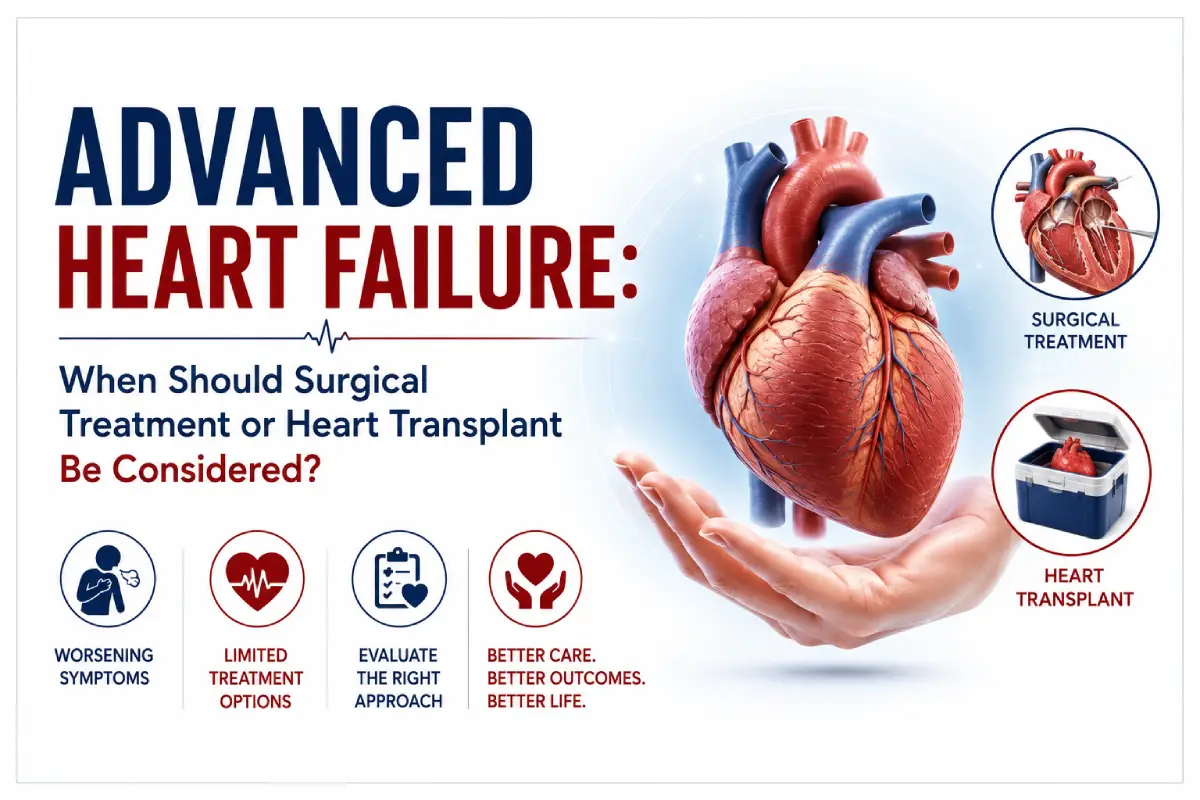
Heart failure is a condition in which the heart cannot pump blood effectively enough to meet the body’s needs. Many people can manage heart failure for years with medicines, lifestyle changes, monitoring, and cardiac devices. However, in some patients, the condition continues to progress despite appropriate treatment.
This stage may be described as advanced heart failure. Patients may experience increasing shortness of breath, severe fatigue, repeated hospital admissions, fluid retention, reduced ability to perform everyday activities, or worsening function of other organs because the heart is no longer maintaining adequate circulation.
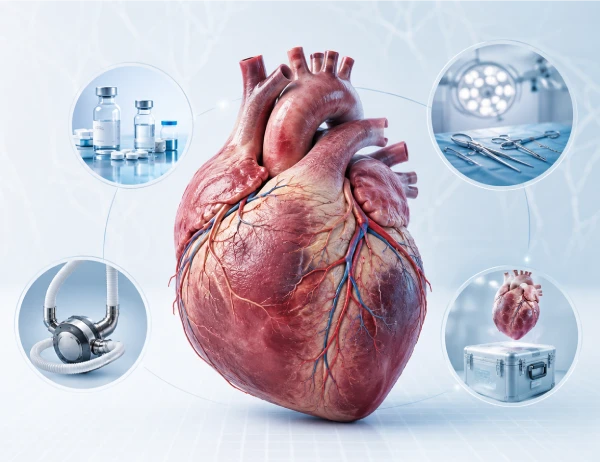
Advanced heart failure does not automatically mean that a patient needs a heart transplant. Depending on the cause and severity of the condition, treatment options may include optimization of medicines, cardiac devices, treatment of coronary or valve disease, ventricular assist devices, other mechanical circulatory support, heart transplantation, or supportive care.
What Is Advanced Heart Failure?
Heart failure does not mean that the heart has completely stopped working. It means that the heart is not pumping or filling effectively enough to maintain the circulation required by the body.
Advanced heart failure generally describes severe heart failure in which symptoms remain significant or continue to progress despite appropriate medical and device-based treatment.
Common causes of heart failure include:
- Coronary artery disease or previous heart attack
- Cardiomyopathy
- Heart valve disease
- Long-standing high blood pressure
- Congenital heart disease
- Abnormal heart rhythms
- Inflammatory or infectious heart conditions
Identifying the underlying cause is important because some forms of heart failure can improve significantly when the original heart problem is treated.
What Are the Symptoms of Advanced Heart Failure?
Symptoms vary between patients and can overlap with other heart and lung conditions. Possible warning signs include:
- Shortness of breath with minimal activity or at rest
- Difficulty lying flat because of breathing problems
- Persistent or increasing fatigue
- Severely reduced exercise capacity
- Swelling of the feet, ankles, legs, or abdomen
- Rapid weight changes related to fluid retention
- Persistent cough or congestion
- Dizziness or light-headedness
- Reduced appetite or weakness
- Palpitations
- Increasing difficulty performing normal daily activities
Symptoms alone cannot determine the stage of heart failure. A complete cardiac evaluation is required.
What Signs Suggest Heart Failure Is Progressing?
Doctors become particularly concerned when heart failure continues to worsen despite appropriate treatment.
- Repeated hospital admissions for heart failure
- Persistent symptoms despite optimized treatment
- Increasing need for medicines to control fluid retention
- Very limited physical capacity
- Low blood pressure that limits treatment options
- Worsening kidney or liver function related to poor circulation
- Progressive deterioration in heart pumping function
- Recurrent serious heart rhythm problems
- Difficulty tolerating standard heart-failure medicines
These problems can indicate that specialist advanced heart-failure evaluation should be considered.
Why Is Early Specialist Evaluation Important?
Advanced heart-failure assessment should not necessarily be delayed until every other option has failed. Earlier evaluation gives the specialist team time to identify potentially reversible problems, optimize treatment, assess whether another cardiac procedure could help, and determine whether advanced therapies may eventually be required.
Some treatment options also depend on the condition of other organs and the patient’s overall health, so waiting until severe deterioration has occurred may reduce the number of available choices.
How Is Advanced Heart Failure Evaluated?
The assessment generally reviews the cause of heart failure, severity of symptoms, heart structure and function, response to previous treatment, other medical conditions, and overall physical condition.
Investigations may include:
- Electrocardiogram (ECG)
- Echocardiography
- Blood investigations
- Kidney and liver function assessment
- Chest imaging
- Coronary assessment when appropriate
- Cardiac MRI or CT in selected patients
- Exercise or functional capacity testing
- Hemodynamic assessment in selected cases
- Heart rhythm evaluation
Does a Low Ejection Fraction Mean Heart Transplant?
No. Ejection fraction is one measurement used to describe how much blood the left ventricle pumps out during each contraction, but a low ejection fraction alone does not mean that a patient requires transplantation.
Many people with significantly reduced heart function can remain stable with appropriate medicines, cardiac devices, treatment of the underlying disease, lifestyle management, and regular monitoring.
Symptoms, circulation, exercise capacity, organ function, hospital admissions, response to treatment, and overall health are also important. Heart transplantation is considered only after comprehensive specialist assessment.
What Treatments Are Available Before Heart Transplant?
Before considering transplantation, doctors assess whether other treatments can improve symptoms, heart function, or long-term outlook.
- Guideline-directed heart-failure medicines
- Control of excess fluid
- Treatment of abnormal heart rhythms
- Cardiac resynchronization therapy in selected patients
- Implantable cardiac devices in selected patients
- Coronary revascularization when appropriate
- Heart valve treatment
- Treatment of contributing medical conditions
- Mechanical circulatory support
Can Bypass or Heart Valve Surgery Help?
Some patients with heart failure also have severe coronary artery disease. In selected patients, coronary artery bypass grafting (CABG) may be considered when restoring blood flow is expected to provide meaningful benefit.
Severe mitral, aortic, or other valve disease can also contribute to heart failure. When valve disease is an important cause of worsening heart function, surgical or catheter-based valve treatment may be considered in appropriately selected patients.
Whether CABG or valve treatment is appropriate depends on cardiac anatomy, heart function, symptoms, overall health, surgical risk, and the expected benefit of treatment.
When Are Advanced Surgical Treatments Considered?
Advanced surgical treatment may be evaluated when severe symptoms continue despite appropriate medical and device therapy or when a structural or mechanical problem within the heart requires correction.
- Coronary artery bypass surgery in selected patients
- Heart valve repair or replacement
- Selected structural cardiac procedures
- Ventricular assist device implantation
- Other forms of mechanical circulatory support
- Heart transplantation in appropriately selected patients
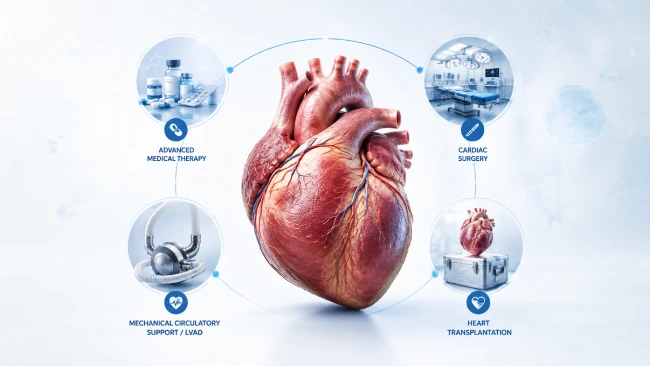
What Is a Ventricular Assist Device (VAD/LVAD)?
A ventricular assist device, or VAD, is a mechanical pump used to support blood circulation when a weakened heart cannot pump enough blood effectively on its own.
The most commonly discussed type in advanced left-sided heart failure is a left ventricular assist device, or LVAD. An LVAD helps move blood from the left ventricle into the body’s main circulation, reducing some of the workload placed on the failing heart.
An LVAD assists the patient’s own heart rather than replacing it completely.
Why Might an LVAD Be Used?
Bridge to Transplant
An LVAD may support circulation while an eligible patient waits for a donor heart.
Long-Term Mechanical Support
For selected patients who are not candidates for transplantation, durable mechanical circulatory support may sometimes be considered as a longer-term treatment strategy.
Bridge to Decision or Further Treatment
In selected situations, mechanical support can provide time for further evaluation or for the medical team to determine the most appropriate next treatment.
Who May Be Evaluated for an LVAD?
Patients with severe advanced heart failure may be assessed for mechanical circulatory support when the heart cannot maintain adequate circulation despite appropriate treatment.
The team may consider:
- Severity of heart failure
- Current circulation and blood pressure
- Kidney and liver function
- Right ventricular function
- Other medical conditions
- Risk of bleeding or infection
- Ability to manage the device safely
- Caregiver and home support
- Overall expected benefit
What Are the Risks of an LVAD?
LVAD therapy can provide important circulatory support, but implantation and long-term device use carry potential risks, including:
- Bleeding
- Infection
- Blood clot-related complications
- Neurological complications
- Device-related problems
- Abnormal heart rhythms
- Right-sided heart failure
The expected benefits and risks require detailed discussion with an advanced heart-failure and mechanical circulatory support team.
What Is a Heart Transplant?
A heart transplant is an operation in which a severely failing heart is replaced with a suitable donor heart.
Heart transplantation is reserved for carefully selected patients with severe advanced heart disease when other appropriate treatments are no longer providing adequate benefit.
Because donor hearts are limited and transplantation requires lifelong specialist care, every candidate undergoes extensive evaluation before being accepted for transplantation.
When May Heart Transplant Be Considered?
Heart transplantation may be evaluated when heart failure is severe, symptoms remain significant despite appropriate therapy, prognosis without advanced treatment is poor, and transplantation is expected to provide meaningful benefit.
Reasons for considering advanced transplant evaluation may include:
- Severe symptoms despite optimized treatment
- Repeated heart-failure hospitalizations
- Progressive deterioration in heart function
- Very poor exercise or functional capacity
- Dependence on advanced intravenous therapies in selected cases
- Progressive organ dysfunction related to poor cardiac output
- Recurrent dangerous rhythm problems in selected patients
- Failure of other appropriate medical, device, or surgical treatments
These findings do not automatically qualify a patient for transplantation. They indicate the need for specialist assessment.
What Is Evaluated Before Heart Transplant?
Heart-transplant candidacy is evaluated by a multidisciplinary transplant team. Assessment may include:
- Severity and cause of heart failure
- Heart and pulmonary circulation
- Kidney, liver, and lung function
- Blood vessel health
- Infection assessment
- Nutrition and physical condition
- Frailty
- Medication history
- Ability to follow complex long-term treatment
- Psychological and social support
- Other factors influencing transplant safety and outcomes
Heart transplantation is suitable only for selected patients. The transplant team evaluates each patient individually and may sometimes recommend another treatment, such as an LVAD, instead.
Heart Transplant vs LVAD
| Factor | Heart Transplant | LVAD |
|---|---|---|
| Main Concept | Failing heart is replaced with a donor heart | Mechanical pump supports the patient’s own heart |
| Availability | Depends on donor-organ availability and transplant eligibility | Device implantation can be considered in selected eligible patients |
| Potential Role | Long-term treatment for selected advanced heart-failure patients | Bridge to transplant or longer-term support in selected patients |
| Long-Term Management | Requires lifelong transplant follow-up and anti-rejection treatment | Requires ongoing device care, power management, medication, and specialist follow-up |
| Final Choice | Determined after comprehensive advanced heart-failure assessment | |
What Happens After a Heart Transplant?
Heart transplantation is not the end of treatment. It begins a new phase of lifelong specialist cardiac care.
Post-transplant care can involve:
- Regular transplant-clinic appointments
- Medicines to reduce the risk of rejection
- Monitoring for infection
- Monitoring donor-heart function
- Blood and cardiac investigations
- Management of cardiovascular risks
- Nutrition guidance
- Physical rehabilitation
- Long-term medication monitoring
What Is Organ Rejection?
Because a donor heart comes from another person, the immune system may recognize it as foreign and react against it.
Transplant recipients therefore require medicines that suppress parts of the immune response and reduce the risk of rejection. These medicines require careful long-term monitoring because they can also increase susceptibility to certain infections and other complications.
What Are the Risks of Heart Transplantation?
Heart transplantation can provide significant benefit to appropriately selected patients, but it is a major procedure with potential risks.
- Bleeding
- Infection
- Organ rejection
- Kidney-related complications
- Medication-related side effects
- Blood vessel complications affecting the transplanted heart
- Other postoperative or long-term complications
How Long Is Recovery After Heart Transplant?
Recovery varies significantly between patients. The early period involves close hospital monitoring followed by a structured transition to outpatient transplant care.
Recovery may be influenced by overall health before transplantation, severity of heart failure, donor-heart function, kidney, liver and lung health, complications, infection or rejection, physical condition, and individual healing response.
The transplant team provides individualized guidance about activity, rehabilitation, medicines, infection precautions, and follow-up.
Can Heart Failure Improve Without Transplantation?
Yes. Some patients improve substantially when the underlying cause is treated or when heart-failure therapy is optimized.
Selected patients may benefit from treatment of coronary artery disease, correction of significant valve disease, management of abnormal rhythms, cardiac resynchronization, or improved medical therapy.
This is one reason comprehensive evaluation is important before considering transplantation.
Why Should Patients Not Wait Until Heart Failure Becomes Critical?
Advanced therapies require careful assessment and planning. If evaluation occurs only after severe deterioration, other organs may already have become significantly affected and the patient’s physical condition may be much weaker.
Patients with repeatedly worsening heart failure should therefore discuss whether referral to an advanced heart-failure team is appropriate.
When Should Patients Seek Urgent Medical Care?
Patients with heart failure should follow individualized instructions from their healthcare team about when symptoms require urgent assessment.
Sudden or severe breathing difficulty, severe or persistent chest symptoms, loss of consciousness, sudden neurological symptoms, or a rapid major deterioration in general condition require urgent emergency medical evaluation.
Questions to Ask an Advanced Heart-Failure Specialist
- What is causing my heart failure?
- How advanced is my condition?
- Have my medicines been fully optimized?
- Would another cardiac device help?
- Could bypass or valve surgery help?
- Should I be evaluated for an LVAD?
- Could an LVAD be used as a bridge to transplant?
- Should I be referred for heart-transplant evaluation?
- Are my kidneys, liver, or lungs being affected?
- What are the risks and benefits of each advanced treatment?
Frequently Asked Questions About Advanced Heart Failure
Does advanced heart failure mean the heart is about to stop?
No. Advanced heart failure describes severe impairment of cardiac function and persistent symptoms despite treatment. Patients can have very different clinical courses, so individualized specialist assessment is essential.
Does a low ejection fraction mean I need a heart transplant?
No. Transplant decisions are not based on ejection fraction alone. Symptoms, functional capacity, organ function, response to therapy, hospitalizations, overall health, and many additional factors are evaluated.
Can heart failure be treated with surgery?
Selected patients may benefit from surgery when a treatable cardiac problem such as coronary artery disease or significant valve disease contributes to heart failure. Advanced patients may also be evaluated for mechanical circulatory support or transplantation.
What is an LVAD?
An LVAD is a mechanical pump that assists the weakened left ventricle in circulating blood through the body. It supports the patient’s heart rather than replacing the entire heart.
Can someone live with an LVAD without receiving a heart transplant?
Selected patients may receive durable LVAD support as a longer-term therapy when transplantation is not planned or appropriate. The decision requires specialist assessment.
Who can receive a heart transplant?
Heart transplantation is considered for carefully selected patients with severe advanced heart disease who are expected to benefit from transplantation and who meet the transplant program’s eligibility requirements.
Does heart transplant permanently cure every heart problem?
A transplant replaces the severely failing heart, but recipients require lifelong specialist care, anti-rejection medication, monitoring for complications, and management of long-term health risks.
Advanced Heart Failure Requires a Personalized Treatment Strategy
Advanced heart failure is not a single condition with one standard solution. Some patients may improve after optimization of medical or device therapy, while others may benefit from coronary bypass surgery, valve surgery, or another procedure that addresses the underlying heart problem.
When the heart can no longer maintain adequate circulation despite appropriate treatment, mechanical circulatory support or heart transplantation may need to be considered.
The most important step is timely specialist evaluation so that the appropriate treatment can be considered before advanced heart failure causes irreversible deterioration in overall health.
Consult Dr. Arunansu Dhole for Advanced Heart Failure & Cardiac Surgical Evaluation
Dr. Arunansu Dhole, MBBS, DNB, MCh (CTVS), MRCS (Eng), is a Cardiothoracic & Vascular Surgeon providing advanced cardiac surgical care, including treatment of complex heart disease, coronary artery bypass surgery, heart valve surgery, minimally invasive and robotic cardiac surgery, and surgical evaluation for advanced heart failure.
If you or a family member has worsening heart failure despite treatment, repeated heart-failure hospitalizations, severe limitation of daily activity, or has been advised to consider advanced surgical treatment, a detailed specialist evaluation can help clarify the available options.
Schedule a consultation with Dr. Arunansu Dhole for individualized assessment and discussion of advanced heart-failure surgical treatment and appropriate referral for mechanical circulatory support or heart-transplant evaluation when required.
Important Medical Information
This article is intended for general patient education only and should not be used to determine whether a person requires an LVAD, heart transplant, bypass surgery, valve surgery, or another advanced heart-failure treatment. Eligibility for advanced therapies requires comprehensive specialist evaluation. Patients should follow the advice of their own cardiologist, heart-failure specialist, cardiothoracic surgeon, and transplant team. Severe or rapidly worsening symptoms require urgent medical assessment.